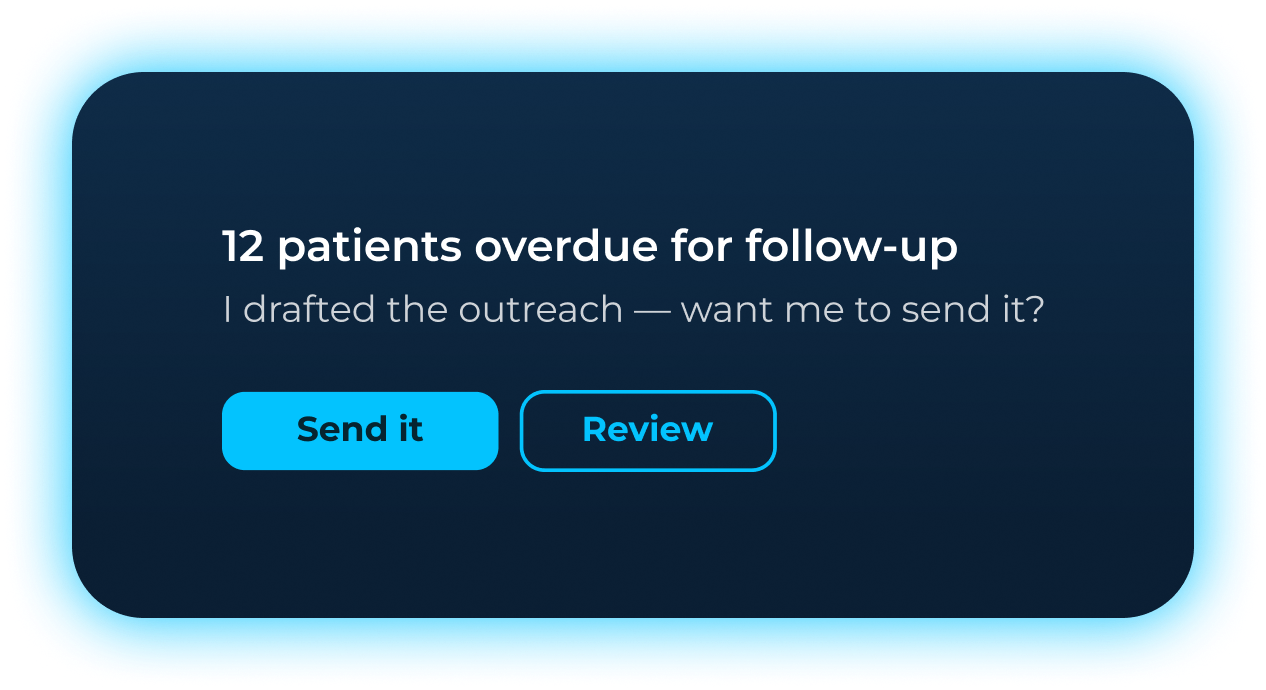
Physician Operating System
Catch what's quietly costing your practice.
The practices that pull ahead aren't the ones with the most licenses or tools. They're the ones whose leaders can answer three questions about any problem:
Does AI belong in this answer at all?
Which tool actually fits?
What would it take to do it safely?
That skill has a name. It's judgment, and it's the one thing a license will never give you. If you have it, you own AI in your practice.
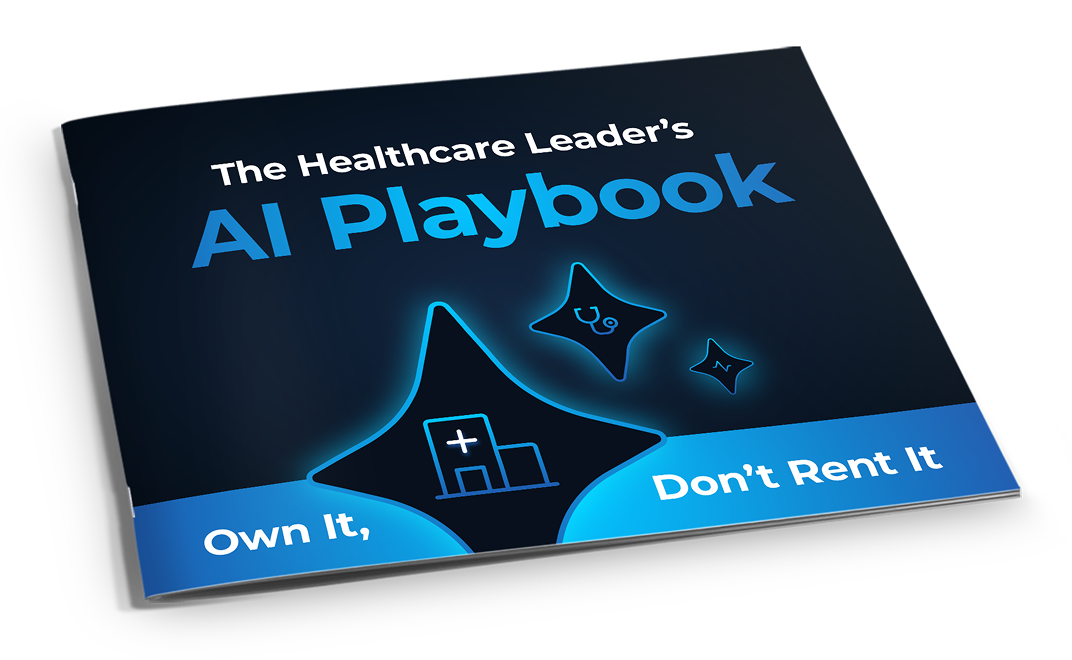
Here's where practices like yours are already putting AI to work with Digital Employees. The best part: digital employees pay for themselves.
Catch what's quietly costing your practice.
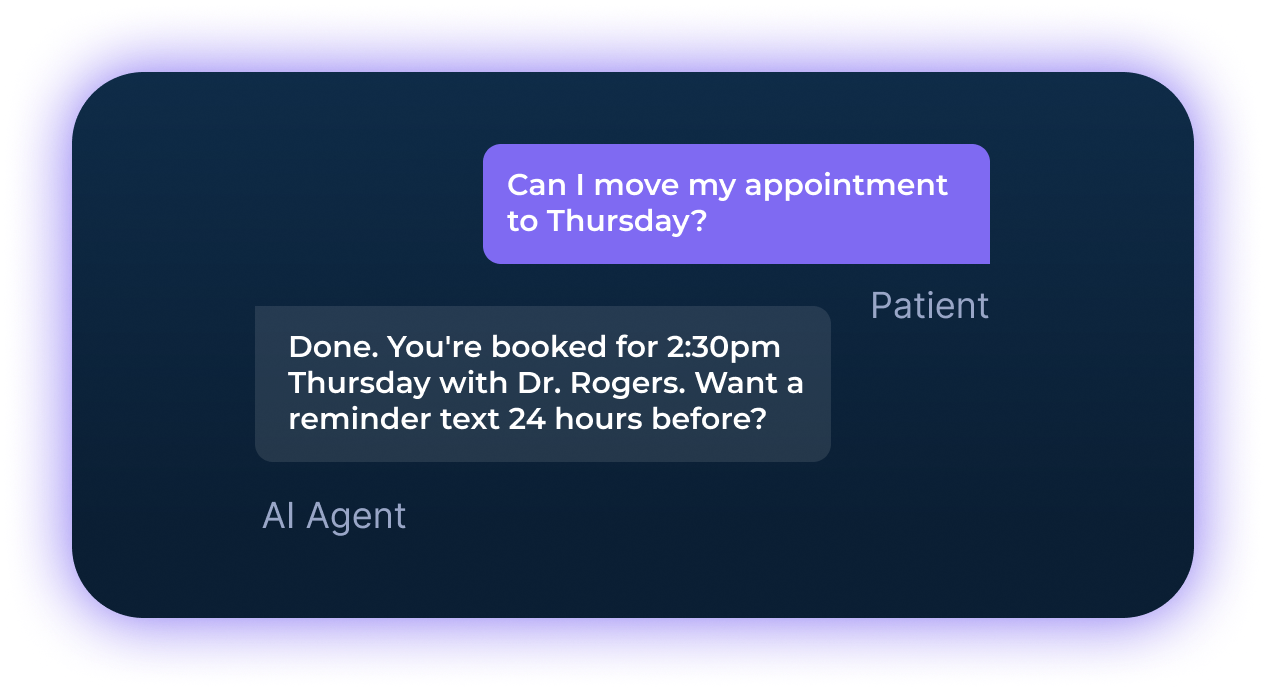
Keep patients from slipping through the cracks.
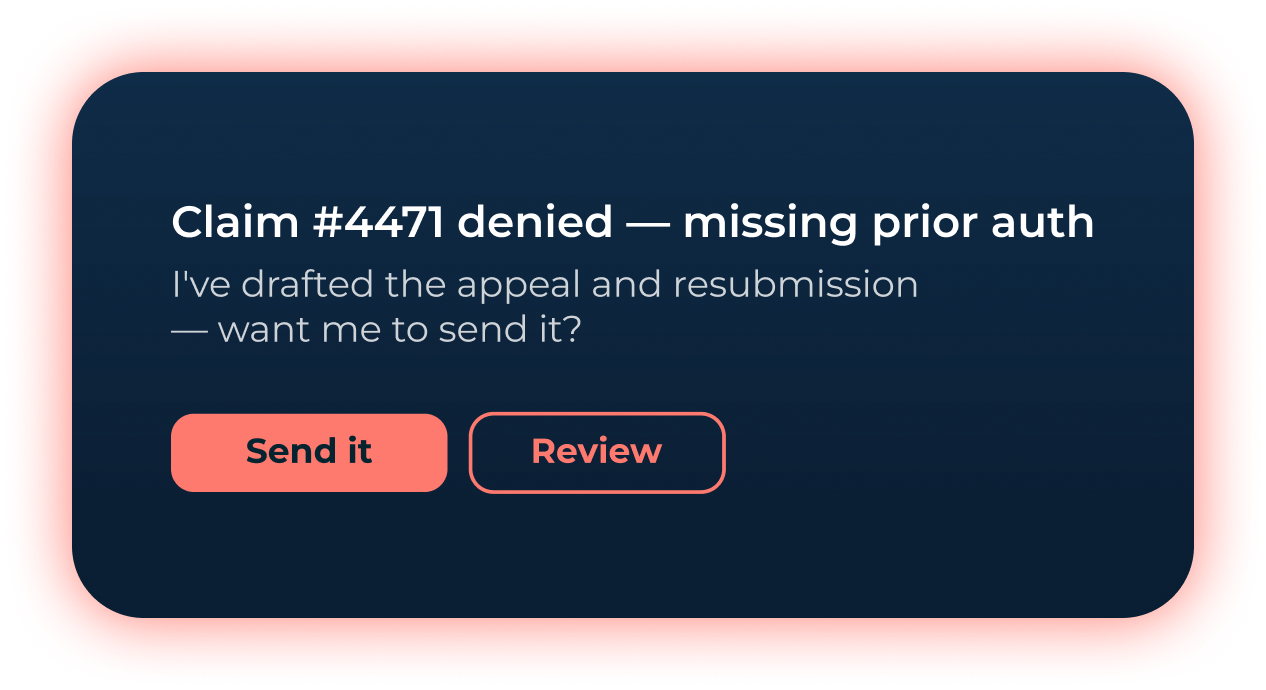
Ensure that all patient revenue is collected.
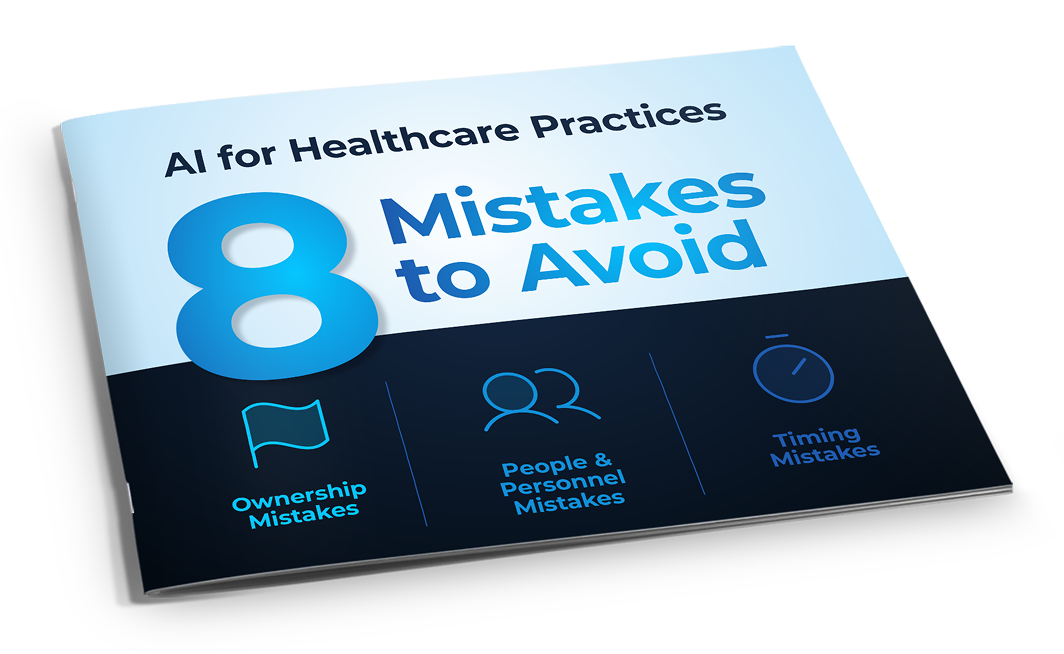
Not another "write a policy" guide
Skips the advice every practice has already heard and goes straight to what's actually costing them
Nine years of healthcare IT distilled into one framework
Three root truths that explain why some practices are pulling ahead and most aren't
8 AI mistakes to avoid in healthcare
The specific, practical ones almost no one in this market is naming out loud
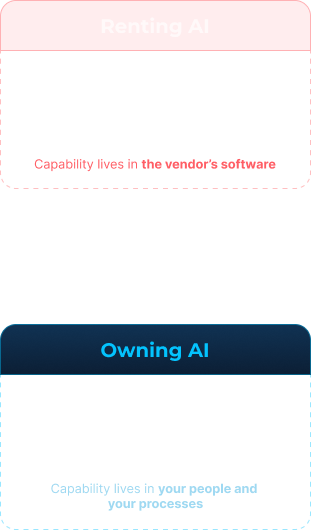
Good start. The risk now is renting forever. The next move is owning the capability, so the tools work the way your practice needs instead of the other way around.

Right instinct. With the right partner, you start where the rules are simplest, prove value fast, and build from there. You never bet your practice on a vendor's timeline.
Start with a short review of where AI can save you time first, and where it is just vendor noise. No rush.

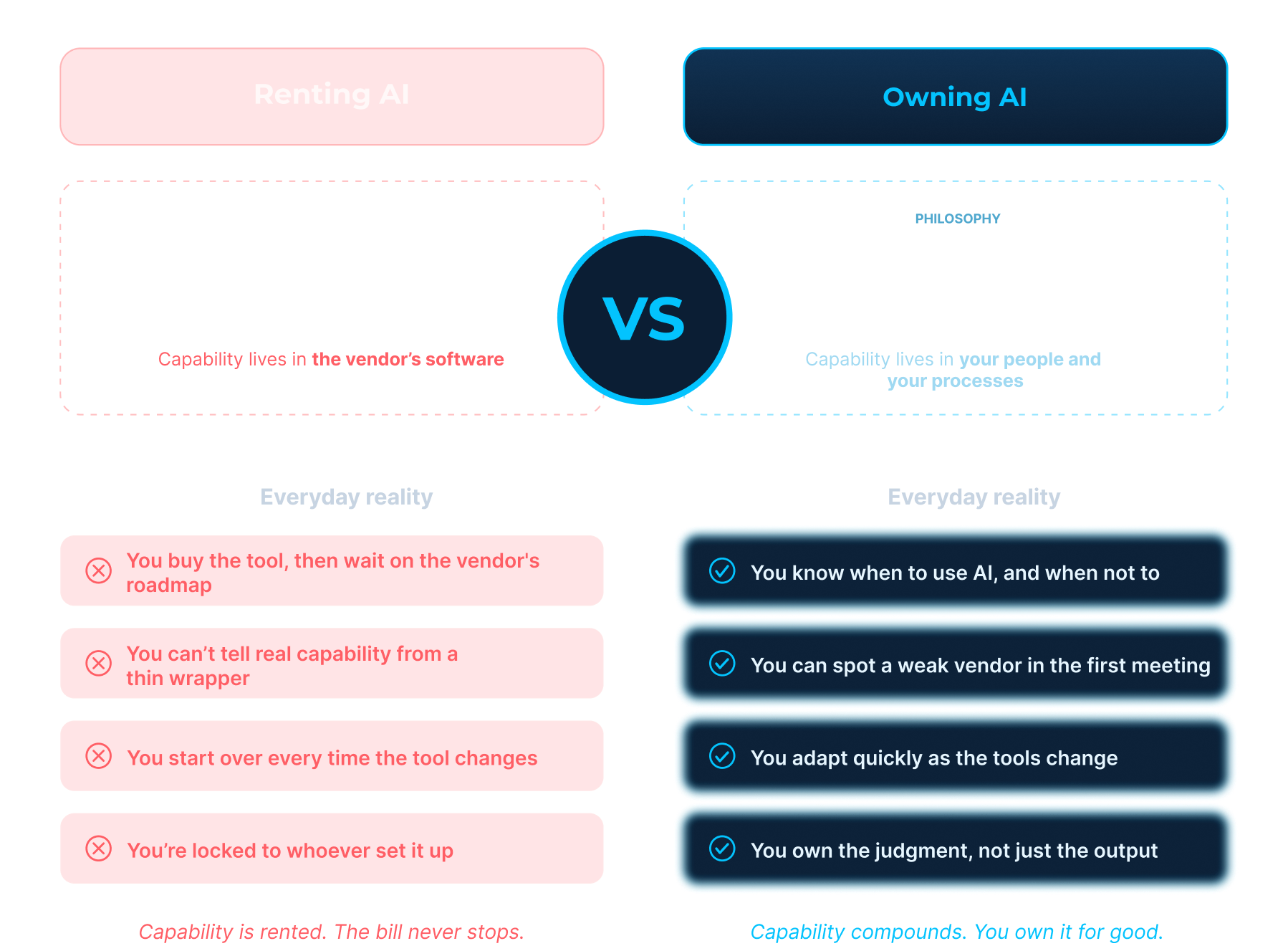
Tools get replaced. Capability doesn't.
The AI landscape resets every few months. The tool you buy today gets acquired, outpaced, or shut down. Knowing how to judge, govern, and adapt AI never expires, because that knowledge is yours.
Tools create dependency. Ownership creates leverage.
Every change routes back through the vendor. You hold a license, not the workflow. Owning the capability puts you back in control of what your practice runs on.
One tool solved one problem. Owned capability solves many.
Point solutions pile up into a brittle, expensive mess. Build the capability once and it carries across documentation, prior auth, and patient outreach. That is what frees up clinical time.
Build the capability your practice will still own five years from now.
It flexes to size and readiness, but the shape stays consistent.
The discovery call plus a short review of where you are and where AI creates value first.
Governance framework in place, executive literacy underway, and the owned platform stood up with guardrails, all in parallel.
First use case in production with a measurable outcome.
Consulting transitions into a managed service that keeps evolving the digital employee, adds use cases, and extends literacy deeper into the organization.
Consulting transitions into a managed service that keeps evolving the digital employee, adds use cases, and extends literacy deeper into the organization.
Path Forward’s AI Operating Program is a managed engagement that makes your leadership team AI-literate and your operation AI-enabled, starting at the top, where governance is simplest, and compounding outward. You start now, you start owning instead of renting, and you don’t stop. The judgment your team builds stays yours, permanently.
See if it’s right for your team.
Start at the top. A HIPAA-aligned governance layer your operators can actually enforce, not a template from legal that nobody reads. Governance is simplest before the sprawl; this is where you begin.
A ranked map of your organization’s real operating problems, so you stop chasing vendor roadmaps and start solving your own problems first.
The questions to ask and the red flags to spot, so your team never sits in a demo unable to tell real capability from a wrapper. Stop buying one-off tools that deepen lock-in.
Real use cases, inside your own walls, with outcomes attached. Not a proof of concept, a proof of capability you now own.

Taking your time is fine. Standing still is not. Here is what waiting costs.
Payers already run AI to deny claims at scale, and fast. A practice with its own tools answers a denial the same day. Everyone else waits weeks and eats the loss.
Staff burn out on paperwork and phones. The practices putting AI on that work keep their people and free them for patients. The ones that wait keep losing good staff to busywork.
The practice that can read its own patient data walks in with leverage. The one waiting on a vendor report walks in blind.
The patients overdue for care do not wait forever. Reach them with AI and they book. Keep mailing letters and they drift to a practice that does.
AI capability doesn't live in IT. It shows up in every visit, every note, and every claim.
Discover what your most urgent AI needs are
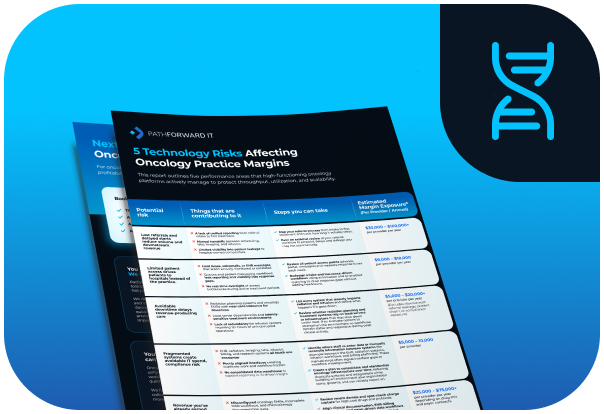
5 IT Risks in Oncology
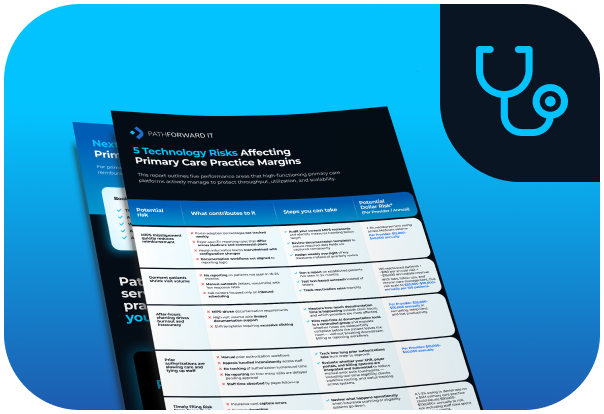
5 IT Risks in Primary Care
We're not learning your industry on your dime. We know your EHR, your payer relationships, and your regulatory exposure before we walk in.
No kickbacks. No preferred vendor. Our advice is about fit, not commission. We will tell you when to pass on a pricey dashboard you do not need.
We understand what happens in the exam room and in billing, not just the server room. We know what a stalled prior auth and a denied claim do to your week. We speak your language because we work in healthcare too
We work alongside your real work so your team builds capability that lasts, not a certificate they forget in a month.
| Pathforward IT | Traditional MSP | One-time course | |
|---|---|---|---|
| Builds internal capability | | (builds dependency) | (vocabulary only) |
| Platform-neutral | | (vendor-commissioned) | N/A |
| HIPAA governance included | | Sometimes | Rarely |
| Runs on your real use cases | | | |
| Ongoing support after engagement | (advisory yr 2) | License renewal | |
Your IT team is one of the biggest reasons to do this. The engagement works alongside them, building their AI literacy and turning them into internal champions who can carry the work forward. We're not replacing your people. We're making them harder to outmaneuver.
No, and it will probably make that relationship more valuable. The engagement gives your leadership team the vocabulary to know exactly what to ask your MSP for, what good looks like, and where your current partnership has gaps.
A consultant builds a strategy and leaves. Our engagement ends with your team owning the judgment, the ability to evaluate, govern, and build without bringing someone in every time the landscape shifts.
The literacy gap doesn't discriminate by size. Smaller organizations are often more exposed; there's less slack to absorb a bad vendor decision or a missed payer dispute. The engagement scales to your organization.
Physicians and clinical leaders first, alongside practice executives. AI shows up in the exam room, the notes, and the claims, so the people who run care should lead it. We also bring in whoever owns your systems and whoever will sponsor the first use cases.
Not in the sense of a course you buy and watch. It's a managed, high-touch engagement built around real work, closer to embedding an operating partner than enrolling in a program. What it produces is entirely digital and theirs: their own AI platform, governance framework, and a digital employee they own. If they want off-the-shelf e-learning, that's not us. If they want to come out owning a working AI capability, that's exactly us.